| Sheet Metal Design & Processing | 中文 |
|
Modular RTX AIO | AIO Chassis | Slim Desktop PC | Slim PC Chassis | Monitor | Touch PC | Touch Display | Learn | Language | ||||||
|
|||||||||||||||
| INNOX Knowledge center |
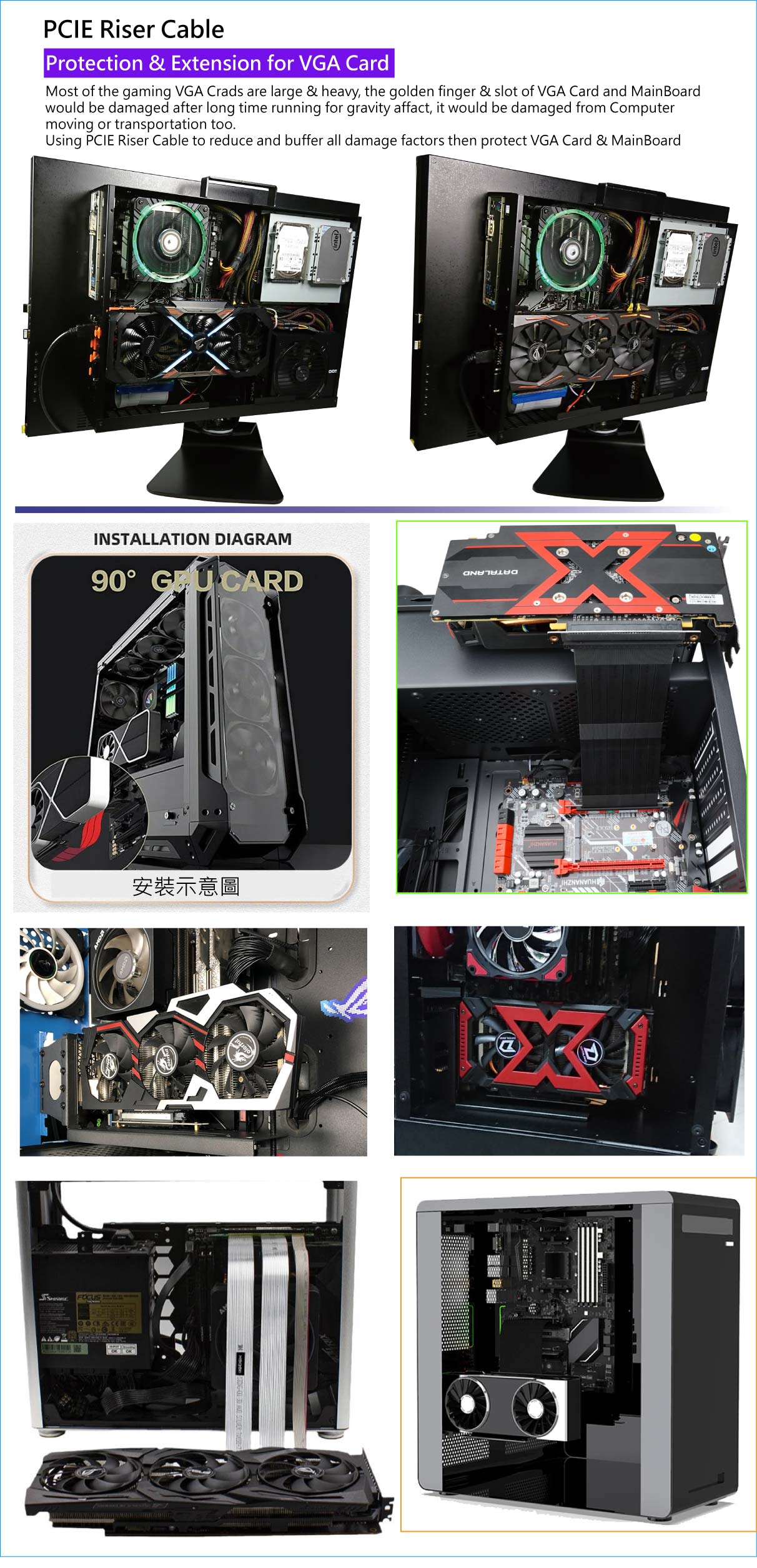
Does a PCIe Riser Affect RTX Graphics Card Performance?Modern AIO PCs, Slim Desktop PCs, and Small Form Factor (SFF) systems frequently use PCIe x16 riser technology to integrate high-performance RTX graphics cards into compact designs. A common question is: Does a PCIe riser reduce GPU performance? The answer depends largely on the quality of the riser and the overall system design. High-quality PCIe 4.0 and PCIe 5.0 x16 risers are designed to support modern graphics platforms with stable high-speed data transmission when properly implemented. What Is a PCIe Riser?A PCIe riser extends the PCI Express x16 connection, allowing the graphics card to be mounted away from the motherboard. This enables more flexible chassis layouts for:
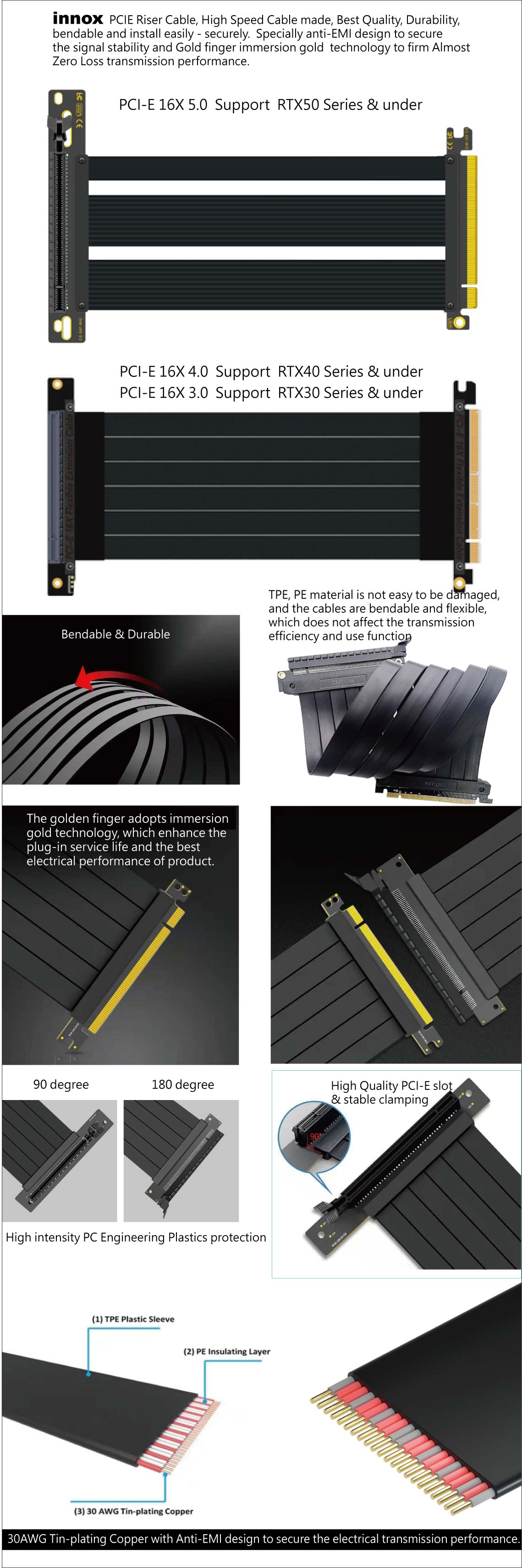
Does a PCIe Riser Reduce GPU Performance?Early-generation risers sometimes suffered from signal integrity issues due to lower-quality materials or inadequate shielding. Today, premium PCIe 4.0 and PCIe 5.0 x16 risers have significantly improved high-speed signal performance. When combined with proper shielding, quality manufacturing, and appropriate cable length, they provide reliable operation for modern RTX graphics platforms. Why Are More High-Performance Systems Using PCIe Riser Designs?Beyond saving space, PCIe risers offer important engineering advantages.
Large RTX Graphics Cards Create New Mechanical ChallengesModern RTX GPUs continue to grow in size and weight. Large graphics cards place considerable mechanical stress on the motherboard's PCIe slot, especially during transportation. A chassis-mounted GPU architecture helps reduce this mechanical load. Protecting the MotherboardINNOX secures the graphics card directly to the chassis rather than relying solely on the motherboard PCIe slot. This architecture helps reduce long-term mechanical stress while improving durability during shipping and transportation. Why INNOX Uses PCIe Riser TechnologyEvery INNOX Modular AIO PC and Slim Desktop PC utilizes premium PCIe 4.0 / PCIe 5.0 x16 riser technology. Our design philosophy focuses on:
ConclusionPCIe riser technology is not a compromise—it is a mature engineering solution for modern high-performance computers. When implemented with premium components and thoughtful mechanical design, it enables powerful RTX graphics performance while improving durability, flexibility, and long-term system reliability.
|